
Why Derealisation Fascinated Me as a Novelist
Until a few years ago, I had never heard the word derealisation.
The strange thing is, I already knew the feeling.
For years I'd occasionally experienced moments that were difficult to explain. They weren't frightening in the traditional sense, and they certainly weren't dramatic. They were simply moments when the world seemed to shift ever so slightly, as though I had stepped half a pace away from reality without actually leaving it.
At the time, I didn't know there was a name for that feeling. I simply assumed it was one of those odd experiences that everyone has but rarely talks about.
Only later, while researching ideas for my novel Dreams Don't Always End, did I discover the term derealisation. Reading about it was one of those rare moments where I found myself thinking, "So that's what it's called."
Before I go any further, I should make one thing clear.
I'm not a psychologist or a mental health professional. Everything in this article comes from the perspective of a novelist who became fascinated by a subject after trying to understand an experience and the questions it raised. If you're experiencing persistent or distressing symptoms, it's always worth speaking to a qualified healthcare professional rather than relying on an author's interpretation.
A Street That Never Felt Quite Real
One afternoon I was walking through Newton Abbot.
It was sunny, the pedestrianised shopping street was busy, and people were moving in every direction. The buildings were a mixture of Victorian frontages and rather uninspiring developments from the 1970s and 1980s. In every objective sense, it was an ordinary afternoon in an ordinary town.
Yet something felt different.
The street was strangely quiet, although I could clearly see people talking. It wasn't that there was no sound. It was more like watching a television programme where everything feels slightly detached from you. Conversations seemed distant, disconnected from the people having them.
The oddest thought crossed my mind.
If I spoke to somebody, would they even notice I was there?
Logically, of course they would. I knew exactly where I was, and I wasn't confused about reality.
But the feeling lingered.
It wasn't fear.
It was uncertainty.
The Cycle Trail I Can't Find
Another memory has stayed with me for years.
Somewhere in South Oxfordshire, I have a vivid memory of cycling along a particular trail. I can picture it clearly enough that part of me remains convinced I rode it.
The problem is that I can't find it.
I've deliberately gone looking for it more than once.
Nothing.
The strange part isn't that the trail has disappeared. It's that I can no longer be certain it ever existed in the first place.
Did I really cycle there?
Did I combine several memories into one?
Did I imagine it entirely?
I honestly don't know.
Most people would probably shrug and move on.
I couldn't.
Not because I desperately needed an answer, but because I became fascinated by the uncertainty itself.
Discovering Derealisation
While researching ideas for my novel, I eventually came across the term derealisation.
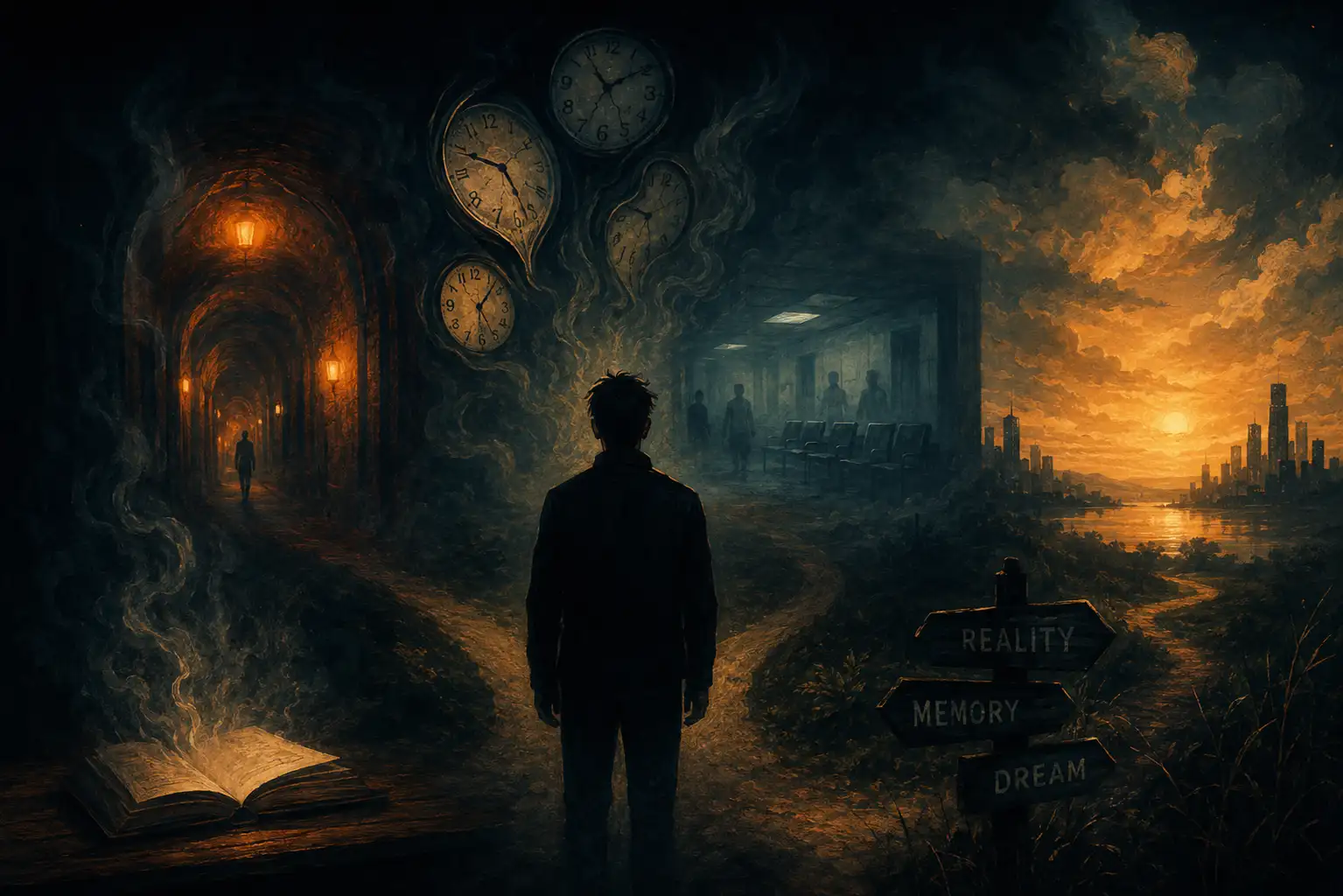
In simple terms, derealisation describes an experience where the world around you can feel dreamlike, distant or strangely unreal, even though you know intellectually that it is real.
It's often discussed alongside depersonalisation, although the two are different.
Derealisation relates to your surroundings feeling unreal.
Depersonalisation relates to feeling detached from yourself.
Learning these definitions didn't suddenly explain every strange feeling I'd ever had, nor did I begin viewing my own experiences through a clinical lens. What it did do was give me a vocabulary for something I'd previously struggled to describe.
For me, that wasn't the end of the journey.
It was the beginning.
The Question That Changed Everything
Most people, after discovering a psychological explanation, would probably stop there.
I didn't.
Instead, my mind wandered somewhere else entirely.
As a novelist, I found myself asking a different question.
What if the explanation wasn't complete?
Not because I doubted psychology.
Not because I believed there was some hidden truth.
But because fiction has always begun with impossible questions.
What if time could stop?
What if memories could be altered?
What if dreams were more than dreams?
My question became this:
What if those fleeting moments weren't simply changes in perception? What if, in the world of fiction, they were glimpses of something else?
That single "what if" became one of the foundations of Dreams Don't Always End.
Photography Before Writing
Looking back, I think I'd been exploring these ideas long before I ever wrote fiction.
Photography has never really been about recording reality for me.
It's about capturing what I see in my head rather than what is objectively there.
That probably explains why I'm drawn to quiet woodland, mist, deserted beaches and empty architectural spaces. Even when I visited Venice—a city famous for its crowds—I found myself creating photographs that made it feel as though I were the only person there.
Years ago, I photographed an office building where I worked.
Looking back, I don't think I was photographing the building at all.
I was photographing how it made me feel.
Soulless.
Detached.
Liminal.
Perhaps the books were already there, quietly waiting for me to notice them.
"Photography for me has always been about capturing what I see in my head rather than what is truly there."
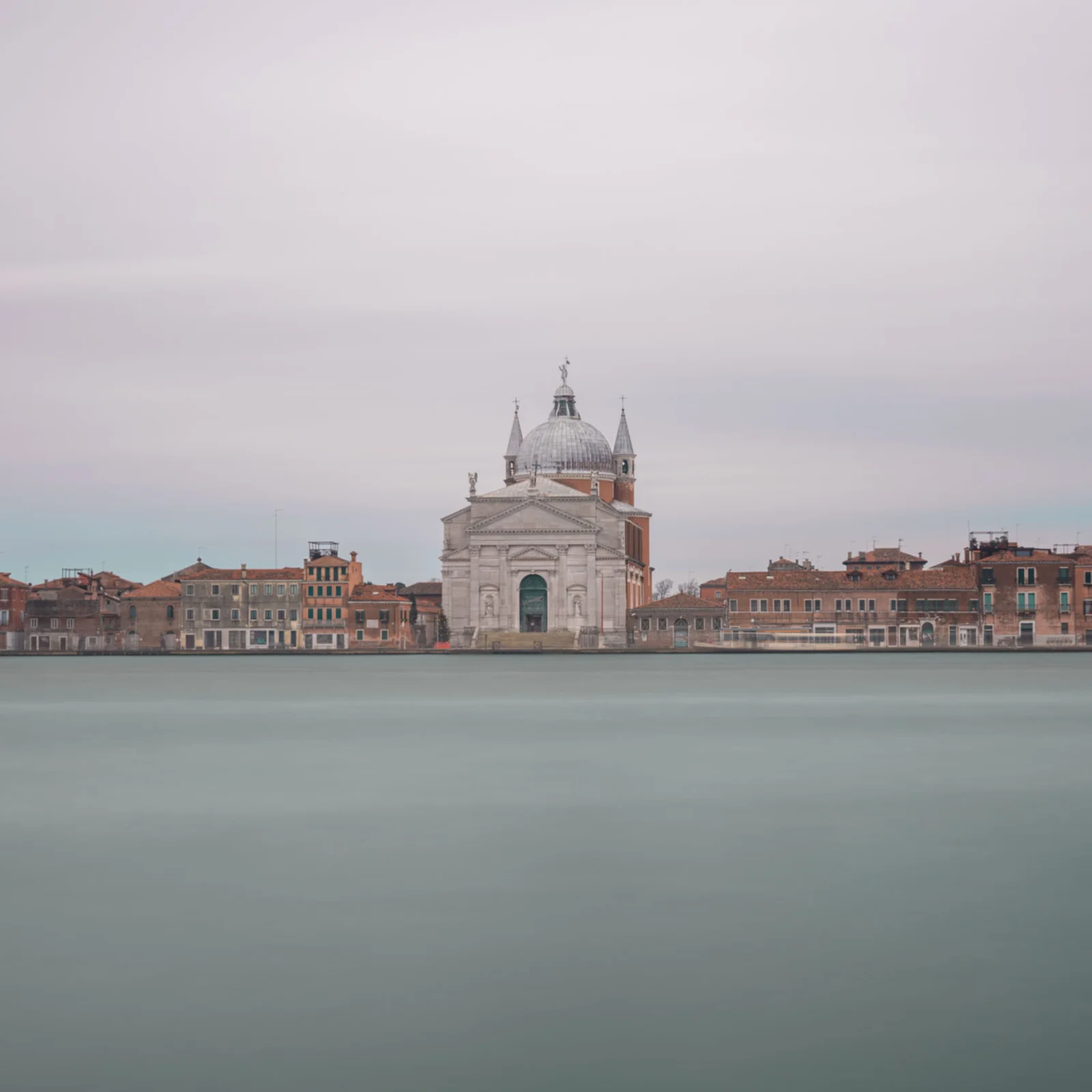
Venice, 2025. One of my favourite photographs. Although the city was busy with tourists, this image reflects how I experienced the moment—as though I were the only person there
Why Uncertainty Fascinates Me
People often ask why my novels blur the line between dreams and reality.
The honest answer is that I don't think they're really about dreams.
They're about uncertainty.
We spend much of our lives searching for certainty.
We want certainty in our careers.
In our relationships.
In our memories.
In our understanding of the world.
Yet life rarely offers complete certainty.
Oddly, I've always found possibility more interesting than certainty.
Destiny has never appealed to me because it suggests everything has already been decided.
Uncertainty leaves room for choice.
It leaves room for hope.
It leaves room for asking questions.
Dreams Don't Always End
Although readers often describe Dreams Don't Always End as a novel about dreams, I think it's really about something deeper.
It's about the moment certainty begins to slip.
The dreams are simply the doorway.
The real story lies in what happens when a person starts questioning the assumptions that underpin their reality.
As I continue writing my second novel, these themes have become even more deeply woven into the story. Without giving anything away, I'm far more interested in exploring perception, memory and the fragile nature of certainty than simply asking whether dreams are real.
The Reader's Question
One of my original ideas for the novel was to tell the story through conversations with a therapist.
The therapist wasn't there to provide answers.
In many ways, the therapist represents the reader.
Throughout the story, both are trying to decide whether the protagonist is mistaken, unreliable or perhaps simply interpreting ordinary events in extraordinary ways.
By the final pages, I don't necessarily want either of them to believe.
I simply want them to accept that there might be another possibility.
Not certainty.
Possibility.
Why I Wrote This Article
I still don't know exactly what happened in Newton Abbot.
I still don't know whether that cycle trail existed or whether it's simply become a convincing memory.
Perhaps there are perfectly ordinary explanations for both.
Perhaps there aren't.
I'm comfortable not knowing.
Discovering the word derealisation helped me understand that other people have described similar feelings, and that psychology has thoughtful ways of explaining them.
As a novelist, however, I found myself asking a different question.
What if?
Not because I believe fiction should replace reality.
But because every good story begins by questioning what we think we know.
If my novels leave readers asking questions about their own assumptions, their memories, or the certainty with which they move through the world, then perhaps they've achieved exactly what I hoped they would.
After all, certainty makes us comfortable.
Questions change us.