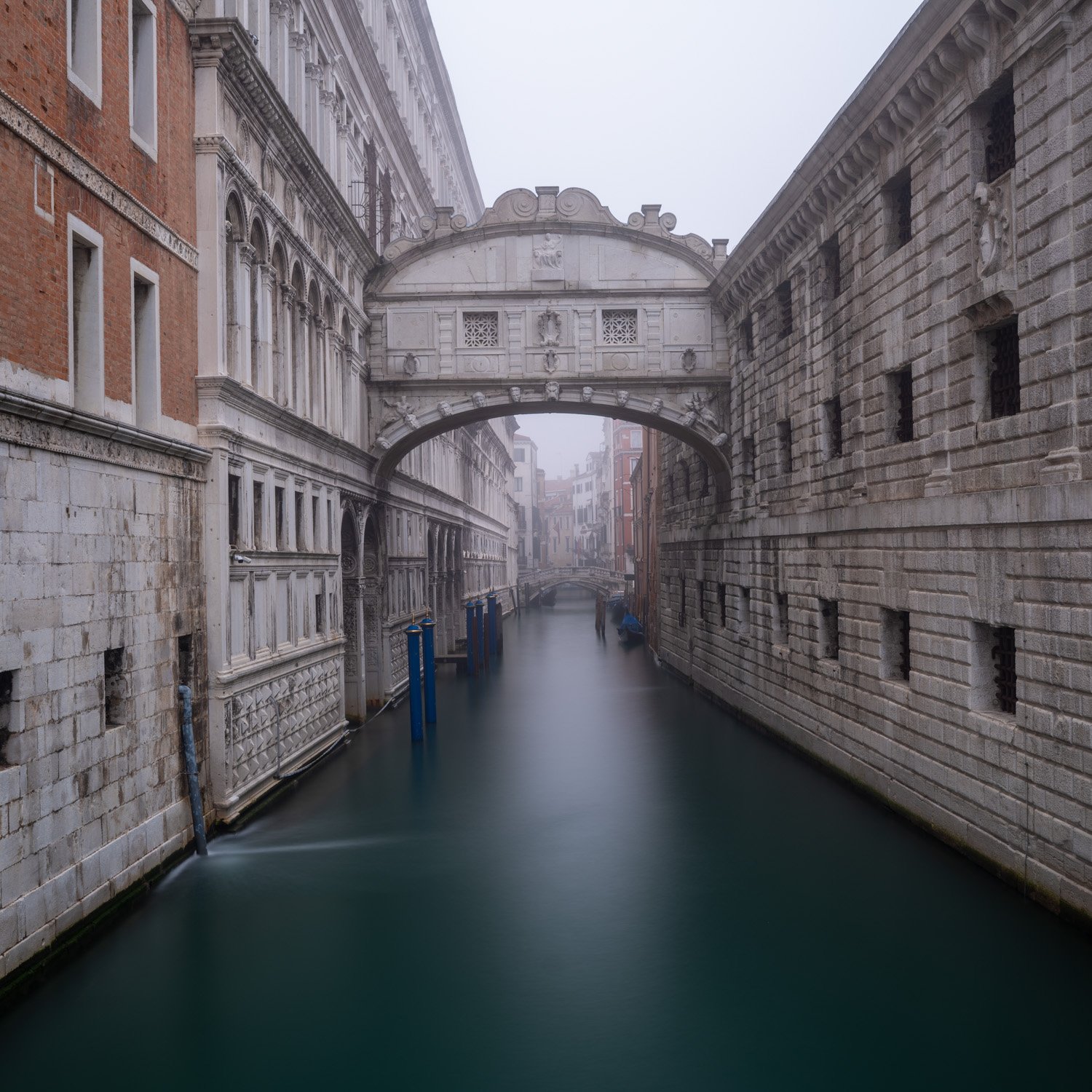
Capturing Time: How Venice Changed the Way I See the World
Every photographer has places that stay with them.
For some, it's because of the photographs they brought home. For others, it's the people they met or the memories they made. Venice has always stayed with me for a different reason. Long before I ever thought about writing fiction, it quietly changed the way I think about time.
At first, I didn't realise it.
I simply enjoyed standing beside a canal with a tripod, waiting for a long exposure to finish. Looking back now, I think something else was happening. Those quiet moments beside the water were teaching me to experience places differently.
Photography is often described as freezing time.
Long exposure photography does something else entirely.
It gathers time together.
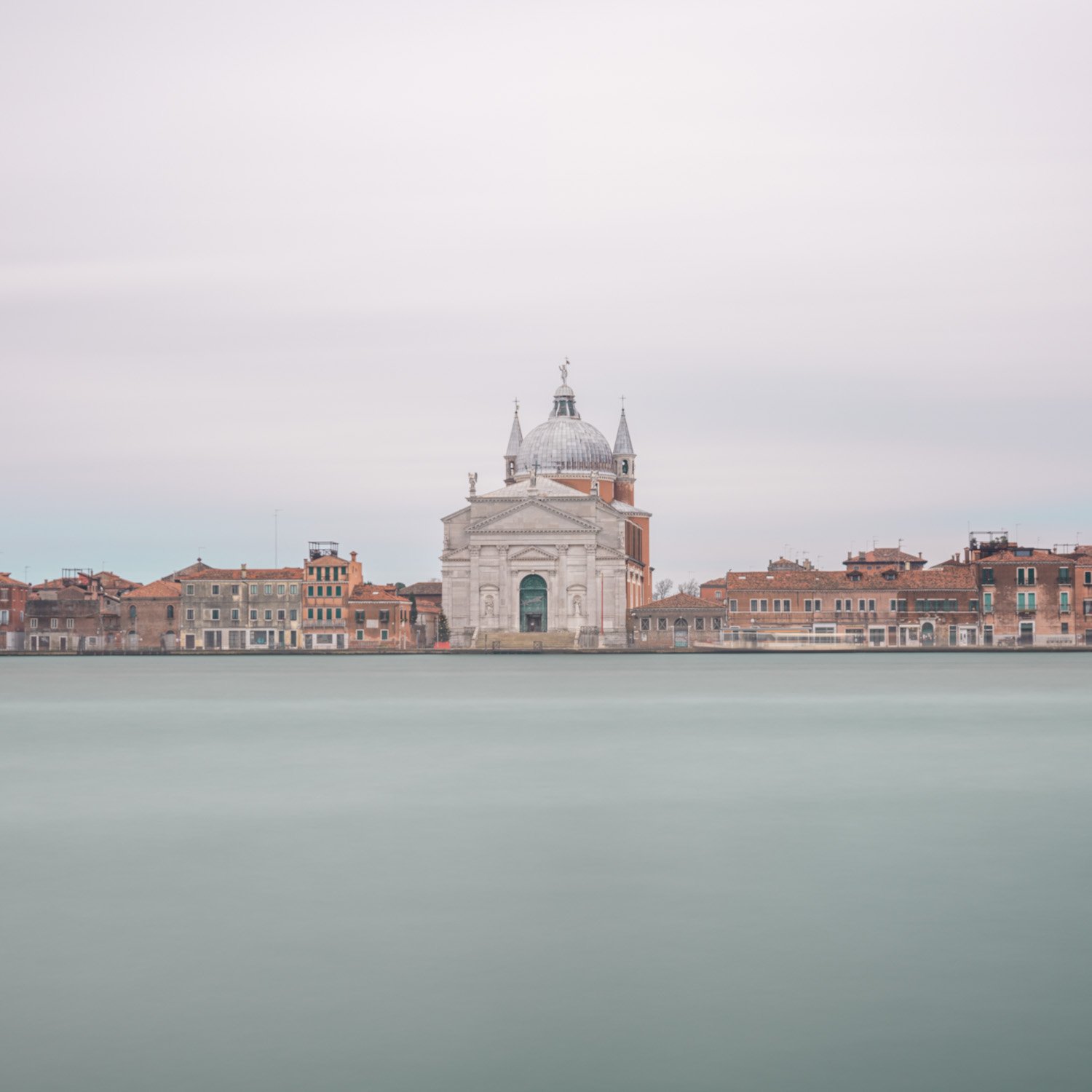
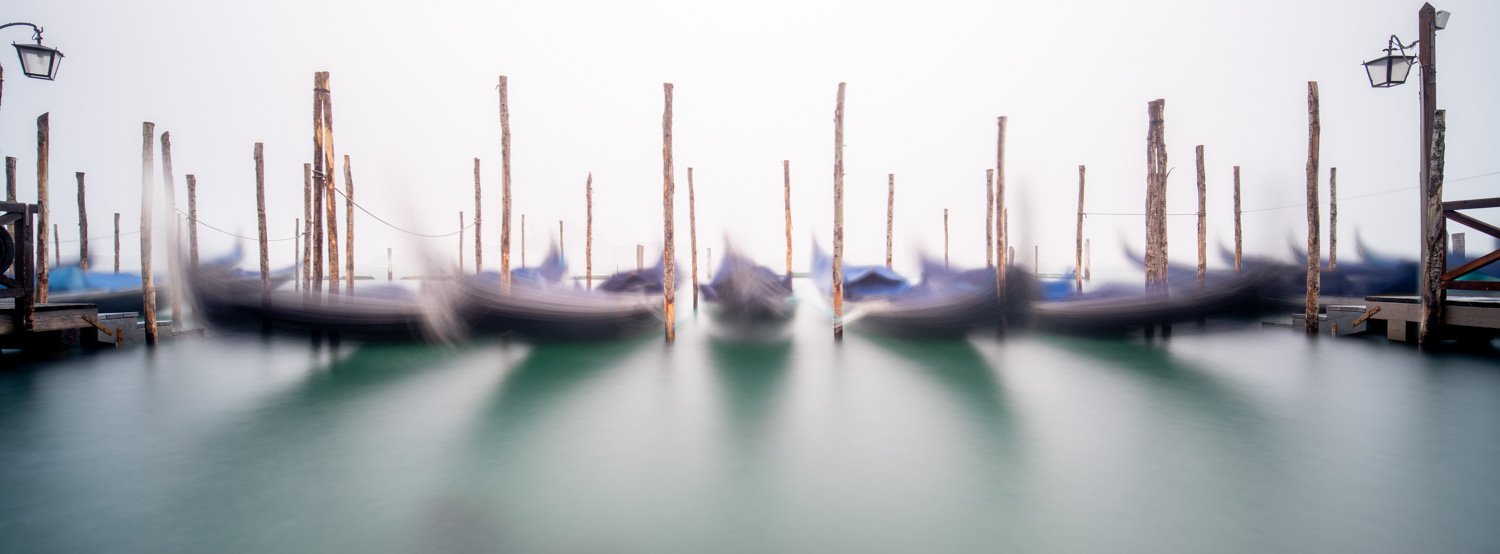
Instead of recording a single instant, it records everything that happens over thirty seconds, a minute, or even longer. Water softens into silk, reflections become painterly and people walking through the frame slowly disappear. They haven't vanished from the city. They've simply become part of the passing of time itself.
Technically, that's all a long exposure is.
Emotionally, it feels like much more.
I've never been particularly comfortable photographing people.
I admire photographers who thrive in busy streets, weaving through crowds and creating beautiful moments from complete strangers. It has never come naturally to me. I've always felt slightly self-conscious pointing a camera towards people I don't know.
Perhaps that's why I found myself drawn to long exposures.
The crowds don't disappear from Venice.
They simply stop demanding my attention.
For those thirty seconds while the shutter remains open, I stop thinking about everyone else. My attention narrows until it becomes just me and whatever I've chosen to photograph.
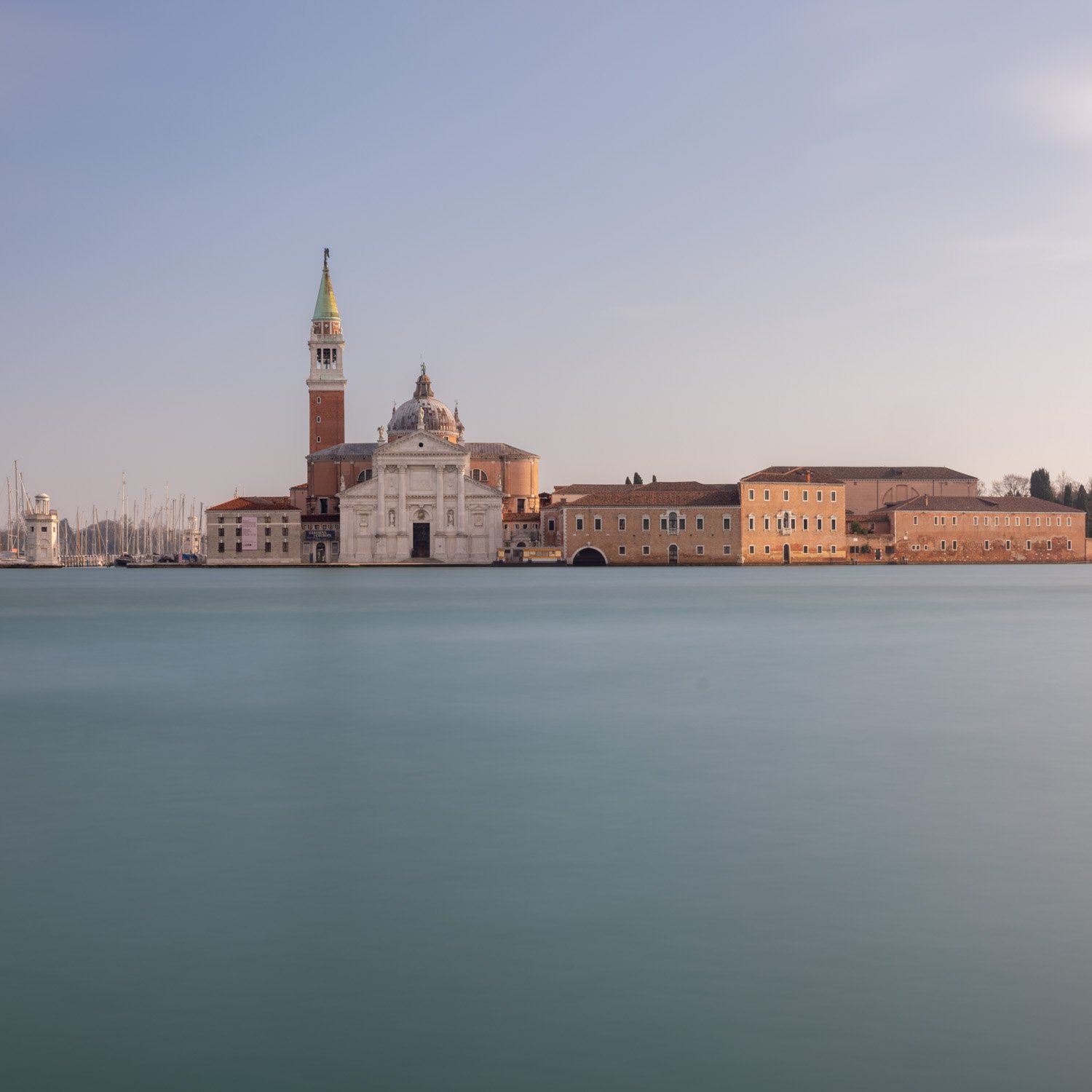
I sometimes think of it as photographic tunnel vision.
Not because I stop seeing the world around me.
Quite the opposite.
I finally stop noticing everything that doesn't matter.
The conversations behind me continue.
Boats still move through the canals.
People still laugh, eat, argue and wander across bridges.
Life continues exactly as it always has.
Yet for a brief moment it becomes background rather than foreground. My entire focus settles on the water, the light, the curve of an old stone bridge or the texture of centuries-old brickwork.
Everything else gently fades away.
It isn't an escape from reality.
It's simply a quieter way of experiencing it.
People often ask why I enjoy visiting Venice in December.
The weather is colder.
The days are shorter.
The skies can be grey.
For many people those would be reasons to go somewhere else.
For me, they're part of the attraction.
Winter allows Venice to breathe.
There are still visitors, bustling cafés, gondolas gliding through the canals and all the life that makes Venice such an extraordinary city. I wouldn't want it any other way.
In fact, I think I'd find an entirely empty Venice rather unsettling.
The city needs its people.
It needs voices echoing across canals, waiters carrying plates through narrow streets and boats gently disturbing the reflections.
Without those things it would feel less like Venice and more like the memory of somewhere that had been forgotten.
Ironically, although those things are an important part of my experience, they rarely become the subject of my photographs.
Instead, they're allowed to exist just outside the frame.
The photographs become quieter than the city itself.
Perhaps that's why they feel honest to me.
I'm not trying to pretend Venice is empty.
I'm simply photographing the way I experience it during those few precious moments when everything else fades into the background.
The strange thing is that the feeling rarely lasts.
As soon as the shutter closes, the spell quietly breaks.
The crowd returns.
The noise returns.
I fold the tripod, put the filter back into its case and begin walking again.
Part of me is always a little disappointed.
Then I smile.
After all, if reality is going to return, there are far worse places than Venice.
What surprises me most is what happens years later.
When I look back at those photographs, I don't remember the exposure time.
I don't remember which filter I used.
I don't even remember making the photograph.
What I remember first is the feeling.
Only after that do I remember the location.
Then the trip itself begins to return.
The photograph isn't simply reminding me where I was.
It's reminding me who I was for those thirty seconds.
That has made me wonder whether photographs preserve far more than light.
Perhaps they preserve states of mind.
Perhaps they're capable of holding emotions that we don't fully understand until years later.
I've always thought memory works in much the same way.
It doesn't preserve every detail equally.
It smooths over distractions and leaves behind what mattered most.
Long exposure photography seems to do something similar.
The photograph doesn't show every passing moment.
It gathers them together into something quieter and, somehow, more meaningful.
As I've begun writing fiction, I've found myself returning to ideas that revolve around time.
Not time travel.
Not paradoxes.
Something much quieter than that.
The way a single moment can seem longer than it really was.
The way memory compresses years into a handful of vivid images.
The strange feeling that some places seem detached from ordinary time altogether.
I don't know whether those ideas began beside the canals of Venice.
Perhaps they did.
Perhaps they were always there and photography simply gave them a language.
Creative influences are rarely obvious while they're happening.
Sometimes we only recognise them years later when we look back.
Standing beside moving water with a camera has become one of those influences for me.
Interestingly, I don't feel quite the same thing on Dartmoor or in woodland.
Beautiful as they are, they ask something different of me.
The coast is different.
Moving water seems to simplify everything.
A long exposure transforms constant movement into stillness.
Chaos becomes calm.
Perhaps that's why I keep returning to it.
The sea, much like memory, never stops changing.
Yet somehow a photograph allows both to become still.
People occasionally ask whether standing beside a tripod for thirty seconds feels like wasted time.
I've never understood that question.
I'm not waiting for something to happen.
Something is already happening.
I'm standing in one of the most beautiful places in the world, watching light change across the water and listening to a city that has existed for centuries.
The photograph is simply the result of being fully present for those moments.
Those seconds are never empty.
They're full.
If anything, they remind me how rarely we allow ourselves to simply stand still.
Perhaps that's the real gift of long exposure photography.
Not the silky water.
Not the empty bridges.
Not even the finished photograph.
The gift is permission to slow down.
Permission to notice.
Permission to experience a place without feeling the need to constantly move on to the next one.
Looking back now, I think those quiet moments beside Venetian canals taught me something I didn't appreciate at the time.
They taught me that time isn't always something to race through.
Sometimes it's something to collect.
Sometimes it's something to hold onto.
And sometimes, if you're patient enough to stand quietly while the shutter remains open, time offers you something unexpected in return.
Whenever I look at those photographs now, I don't see proof that I visited Venice.
I see a reminder that, for a few brief moments, I experienced it exactly as I needed to.
The image is simply the evidence.
The real photograph was taken long before I pressed the shutter.
It was taken in the silence that existed while everything else disappeared.
And whenever someone asks whether standing still for thirty seconds is worth it, I always come back to the same thought.
I have captured time rather than wasted it.